

From Kahneman to AI: Teaching Transformers to Think Fast and Slow
How dynamic depth adaptation is revolutionizing the way AI models process information

Consider the Scenario: you are using GPT-4 to write a simple email and solve a complex mathematical proof. Behind the scenes, the model is running the exact same computational process for both tasks, all 96 layers firing in sequence, regardless of whether you are asking for a grocery list or a dissertation on ethical hacking.
This seems inefficient, doesn't it? the AI community is starting to agree.
Enter the Age of Adaptive Intelligence
A fascinating new frontier in AI research is emerging around dynamic depth adaptation, precisely, the ability for neural networks to adjust their computational depth based on the complexity of each individual task or input.
If this sounds familiar, it should. Nobel Prize winner Daniel Kahneman described this exact phenomenon in humans in his masterwork "Thinking, Fast and Slow." He identified two distinct modes of human cognition: System 1 (fast, automatic, intuitive) and System 2 (slow, deliberate, analytical).
Now, AI researchers are essentially trying to recreate Kahneman's dual-system theory in artificial neural networks. The goal? Teaching AI models to think fast for simple problems and slow for complex ones, just like humans do.
Recent research suggests that our current approach to AI inference might be fundamentally flawed. Certain parameters face significant optimization difficulties due to architectural limitations (e.g., insufficient depth) or parameter constraints.
The solution? Models that can dynamically adjust their thinking process in real-time.
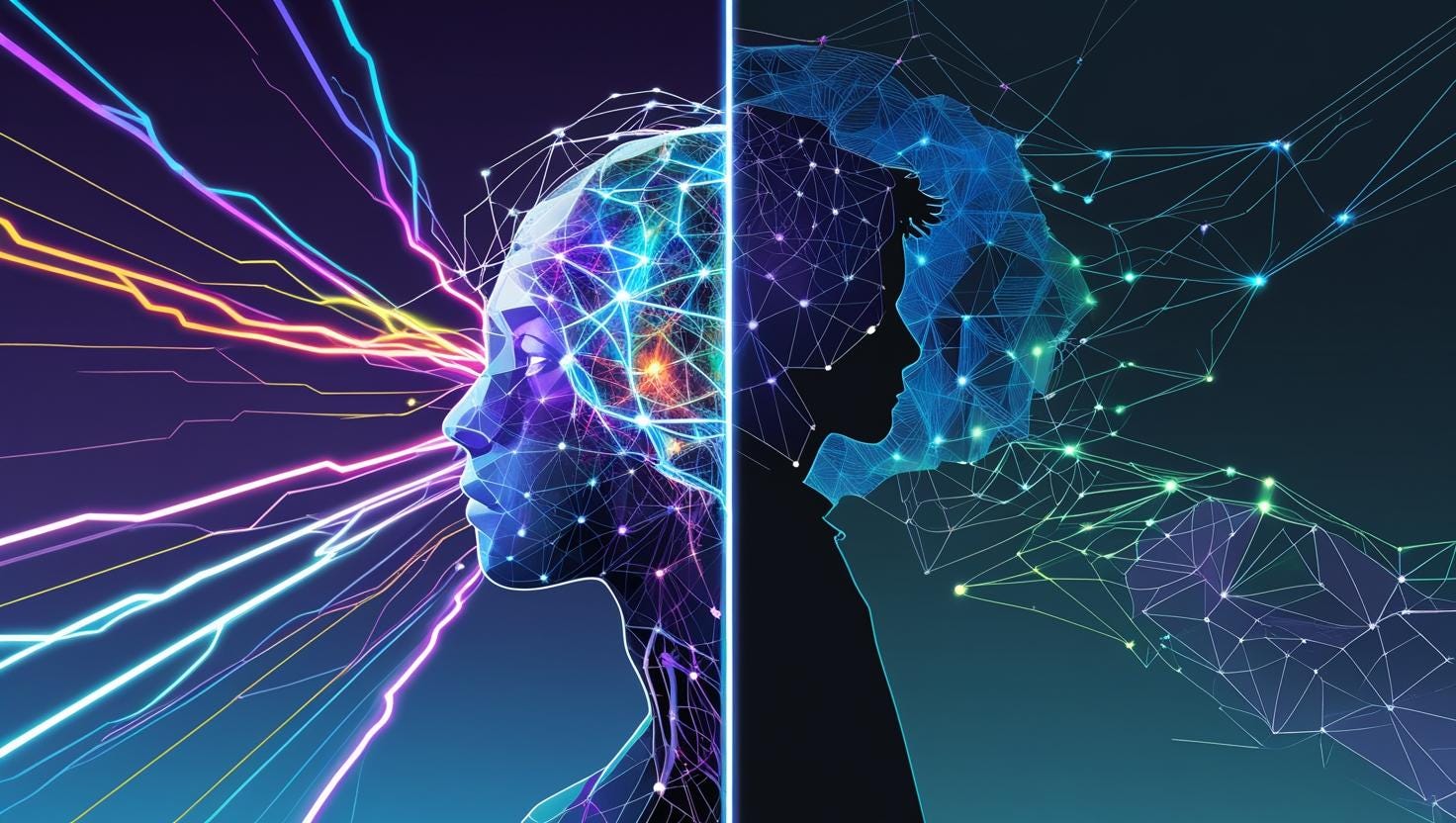
Paths to Smarter AI
1. Early Exit Networks: The Speed Demons
Adding "emergency exits" throughout the model. Research shows that sequence-to-sequence models can "make output predictions at different stages of the network" rather than always processing through every layer.
Imagine a model that can confidently answer "What's 2+2?" after just a few layers but uses its full depth for "Explain the implications of quantum entanglement."
This isn't science fiction, models like FastBERT and DeeBERT are already doing this, achieving significant speedups by letting simple inputs exit early.
2. Looped Transformers: The Deep Thinkers
The second approach goes in the opposite direction. Instead of using fewer layers, what if we could use the same layers multiple times? Looped Transformers treat individual layers like thoughts in a loop, repeating them until the problem is solved.
This approach has shown remarkable success in algorithmic tasks and length generalization—problems that require iterative thinking benefit enormously from this "recurrent depth" approach.
3. Dynamic Layer Orchestration: The Conductor
The most ambitious approach involves treating transformer layers like orchestra musicians—some problems need the full symphony, others just need a string quartet, and sometimes you need to play the same movement twice.
Recent evaluations show that models using dynamic depth scaling can "achieve 96.5% performance of a 466M Transformer using only 162M parameters" while reducing training data by 43.2%. This isn't just efficiency—it's a fundamental reimagining of how AI processes information.
The Human-Like AI Revolution
What's particularly exciting is how this mirrors Kahneman's insights about human cognition. Just as we don't engage System 2 thinking to decide what to have for lunch but absolutely need it for complex problem-solving, AI models are learning to match their computational intensity to the cognitive demands of each task.
This research addresses a profound question that bridges psychology and computer science: Can AI learn to allocate its computational resources as intelligently as humans allocate their mental resources between System 1 and System 2 thinking?
We're essentially witnessing the birth of Kahneman's dual-system theory in silicon. AI models that can switch between fast, intuitive processing and slow, deliberate analysis based on what each situation demands.
What This Means for the Future
The implications are staggering:
Efficiency Revolution: AI models could become dramatically more efficient, running complex reasoning only when needed while breezing through simple tasks.
Personalized Intelligence: Models could adapt their thinking style to individual users and contexts, becoming more thoughtful for users who need deep analysis and more responsive for those who need quick answers.
Sustainable AI: By reducing unnecessary computation, we could dramatically lower the environmental impact of AI systems while maintaining their capabilities.
Edge AI Renaissance: Phones and IoT devices could run sophisticated AI models by dynamically scaling their depth based on available resources.
The Road Ahead
We're still in the early stages of this revolution. Current research focuses on test-time adaptation, changing how models think without retraining them. But the ultimate goal is more ambitious: models that learn to think adaptively from the ground up.
The race is on to solve fundamental questions:
How do we decide when to think fast versus slow?
How do we ensure consistency across different thinking depths?
How do we maintain the quality of reasoning while dramatically reducing computation?
The Bottom Line
We're witnessing the birth of truly adaptive AI in the form of systems that don't just process information, but intelligently decide how to process it. This represents the first serious attempt to implement Kahneman's dual-system theory in artificial intelligence.
For small IT teams, this shift toward adaptive intelligence is especially significant. With limited resources and increasing demands for automation, efficiency is a survival strategy. Models that can dynamically scale their computational depth offer a practical path forward, enabling lightweight deployments that still deliver robust performance. This technology could empower lean teams to handle complex workloads, optimize infrastructure costs, and stay competitive without needing enterprise-scale resources.
The future of AI isn't just about bigger models or more data, it's about smarter models that have mastered the art of knowing when to think hard and when to think fast. We're not just building faster computers; we're building machines that understand the psychology of thinking itself.
What do you think about adaptive AI? Are we ready for models that can dynamically adjust their thinking process? The conversation about the future of intelligence, artificial and otherwise, has never been more fascinating.